
Owner Insights
HannahJuly 14, 20267 min read

The short version
Washington rewrote the rules for rental owners, and a lot of the advice still circulating online has not caught up. House Bill 1217, signed in May 2025, gave the state its first rent stabilization law, and it stays in force until 2040. If you own rental property in Seattle, you are now governed by two stacked layers: a statewide cap, and a set of Seattle rules that are stricter than the state’s at almost every turn.
Here is exactly where the rules stand as of July 2026, what each one means in practice, and where owners are most often caught out.
For 2026, the maximum rent increase allowed in any 12 month period is 9.683% for tenancies covered by the Residential Landlord Tenant Act. Seattle owners must also give at least 180 days written notice, and cannot raise rent at all during the first 12 months of a tenancy.
The 9.683% figure is not arbitrary, and it is not permanent. The law sets the ceiling at 7% plus the Consumer Price Index, or 10%, whichever is lower. The Department of Commerce publishes the number each year shortly after the federal Bureau of Labor Statistics releases its June data, which usually lands in early July.
This resets every year
A rent schedule built on last year’s percentage will be wrong. The cap is recalculated annually, so July is the month to re-check it, not January.
If you own manufactured or mobile home lots, the cap is 5% in any 12 month period, not 9.683%. It is a different regime and it is easy to miss.
No rent increase is permitted during the first 12 months of a tenancy, of any type. This applies even if the unit was leased below market to fill a vacancy quickly.
This is the provision that catches owners out more than any other, and it quietly changes how you should think about leasing. Under the old rules, underpricing a unit to get it filled fast was a correctable mistake: you could adjust in six months. Now, if you underprice a unit in January to shift it, you are locked into that rent until the following January, and even then you can only climb by the annual percentage on top of the number you set.
The initial price is no longer an opening offer. It is a twelve month commitment, and then a ceiling on how fast you can recover from it. Pricing at lease-up has gone from a leasing decision to an asset decision.
Washington State requires at least 90 days written notice before a rent increase. Seattle requires 180 days for any increase, regardless of size. It is one of the longest notice periods in the country.
| Jurisdiction | Notice required | Applies to |
|---|---|---|
| Washington State | 90 days | Any rent increase |
| Seattle | 180 days | Any rent increase, any amount |
The practical effect is that a Seattle rent increase has to be planned roughly six months out. If you want a new rent to begin on 1 January, notice needs to be served in early July. Miss that window and the increase is not merely delayed, it is invalid, and serving it late exposes you to penalties.
For an owner with a single unit, that is a diary entry. For an owner with a portfolio, where every tenancy has a different anniversary, it is an operating process that has to run every month without fail.
A Seattle rent increase of 10% or more within 12 months requires an Economic Displacement Relocation Assistance (EDRA) notice. Eligible lower income tenants may then claim relocation assistance worth three months of rent.
The nuance almost every article misses
The 2026 statewide cap is 9.683%, which sits just under the 10% EDRA threshold. So a tenancy that is covered by the cap cannot legally reach the level that triggers EDRA in the first place. Where EDRA still genuinely bites is on properties that are exempt from the cap. If you believe a property of yours is exempt, that is precisely the situation where EDRA turns into a live financial exposure.
The cap does not apply to every property. Exemptions are set out in RCW 59.18.710 and cover specific categories, including certain newer construction. Owners assume they qualify far more often than they actually do.
The penalty does not care whether the mistake was honest. An owner who believed in good faith that a building was exempt, and was wrong, is in the same position as one who ignored the rule. Exemption status is worth confirming in writing, once, rather than assuming annually.
In Seattle, violations of the rent increase rules can bring civil penalties of up to $7,500 per violation, plus mandatory damages and the tenant’s attorney fees.
The word doing the work in that sentence is per violation. On a building where a single misapplied increase was served across every tenancy, that is not one mistake. It is one mistake per door. A twenty unit building with one bad notice template is a very different financial event from a single rental house.
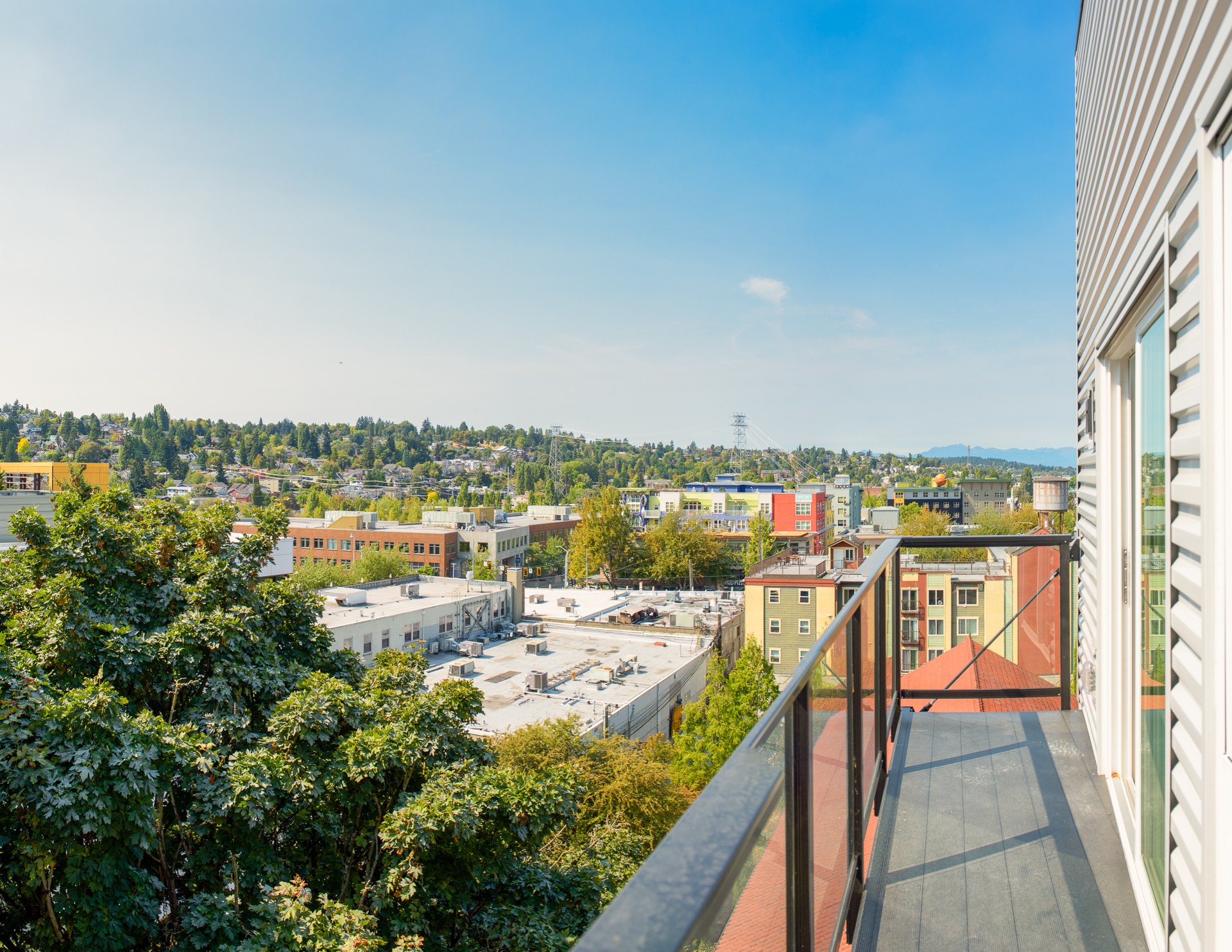
The uncomfortable arithmetic is that rent growth in Seattle is now capped below what an undersupplied market would otherwise support, while insurance, labour, utilities and vendor contracts keep climbing. Owners can no longer price their way out of cost inflation.
That means returns increasingly come from the parts of the operation that were easy to neglect while rents were rising freely: keeping good residents so units do not turn, controlling turn costs when they do, collecting reliably, and running maintenance as a planned programme rather than a series of emergencies. It is a harder discipline than raising rent, and over a full cycle it is what separates a well run building from an average one.
Up to 9.683% in any 12 month period for tenancies covered by the Residential Landlord Tenant Act. The cap is recalculated annually as 7% plus CPI, or 10%, whichever is less.
Seattle requires at least 180 days written notice for any rent increase, regardless of size. Washington State requires 90 days. In Seattle the stricter local rule applies.
No. Washington law prohibits any rent increase during the first 12 months of a tenancy, of any type.
An Economic Displacement Relocation Assistance notice must accompany a Seattle rent increase of 10% or more in a 12 month period. Eligible lower income tenants may then claim relocation assistance equal to three months of rent.
Civil penalties of up to $7,500 per violation, plus mandatory damages and the tenant’s attorney fees. Each affected tenancy can count as a separate violation.
Some properties are exempt under RCW 59.18.710, including certain newer construction. Exemption is not automatic and should be confirmed rather than assumed, because the penalty for getting it wrong does not depend on the mistake being deliberate.
Not certain your last rent increase was served correctly?
Pacific Crest Real Estate manages more than 4,800 units across Seattle, the Eastside, Snohomish County and the wider Puget Sound region. Rent increase compliance is not a legal footnote for us, it is a monthly operating process.
Verified as of July 2026. This is general information, not legal advice. Rent caps are recalculated annually and local rules change. Confirm your specific situation with qualified counsel before acting.