Property Management
HannahNovember 10, 20269 min read
The short version
Seattle’s Rental Registration and Inspection Ordinance (RRIO), SMC chapter 22.214, requires owners of most rental housing to register each property with the Seattle Department of Construction and Inspections (SDCI), renew every two years, and pass a safety inspection at least once every 5 to 10 years. As of January 2026, registration costs $126 per property plus $31.50 for each additional unit. Missing a registration or inspection deadline can bring penalties of $150 per day, then $500 per day.
RRIO is a City program, created by the Seattle City Council in 2014, that requires rental properties to be registered and periodically inspected against basic safety and maintenance standards. It is administered by SDCI and funded by the fees owners pay.
The inspection standard is the RRIO Checklist, a subset of the Seattle Housing and Building Maintenance Code that focuses on life, health and safety. The rules are in SMC chapter 22.214, and the penalty provisions are in SMC 22.214.086. For owners, RRIO is less about a one-time event and more about a recurring calendar: register, renew every two years, and be ready when SDCI selects the property for inspection.
Most rental housing in Seattle must be registered, with a few exceptions. Registration is due once a tenant occupies a rental unit.
SDCI lists these as covered: multi-family apartment buildings, single-family homes for rent, boarding houses, fraternity and sorority houses, micro-housing, floating on-water residences and vacation home rentals that are not owner occupied. Short-term rentals that are not the operator’s primary residence must register before listing.
The City’s FAQ names hotels, nursing homes, religious housing, government housing and emergency housing as exceptions, and says some institutional housing may also be exempt. If your property does not fit neatly, call the RRIO helpline at (206) 684-4110 before assuming you are exempt, because an incorrect assumption leaves you exposed to penalties.
One related carve-out concerns accessory dwelling units. If you live on the property and an immediate family member occupies the accessory dwelling unit, notify SDCI and that unit is exempt from the inspection requirement.
As of January 2026, registration is $126 per property, which includes the first unit, plus $31.50 for each additional unit. It is valid for two years and must be renewed at the end of each two-year period.
| Item | Fee |
|---|---|
| Registration or renewal, 1 unit (2 years) | $126 |
| Registration or renewal, 2 units (2 years) | $157.50 |
| Registration or renewal, 20 units (2 years) | $724.50 |
| City inspector, property including first unit | $241.50, plus $52.50 per additional unit inspected |
| City follow-up inspections | No additional charge |
| Private inspector filing fee | $63, plus the inspector’s own price |
| Late fee, overdue registration or inspection | $52.50 |
SDCI contacts owners about 60 days before a registration expires, and the renewal process asks you to verify contact and property information, declare that all units meet minimum housing standards, and pay the fee. Renew online through the Seattle Services Portal, or by mail with the registration form. Fees are subject to change, so confirm the current schedule on the SDCI fee page before you pay.
Every registered property must be inspected at least once every 5 to 10 years. SDCI selects properties at random, or because a recent inspection found potential additional maintenance problems, and sends a Notice of Inspection at least 60 days before the due date.
Selection works in two stages. A property is selected once after registration, and there is a 10% chance of a second selection in the following five years. For multi-unit properties, SDCI inspects the exterior and common areas plus a sample of units, in most cases 20%. You can ask the RRIO team for the selected units 10 days before the inspection, or you can choose to inspect every unit.
Ways to meet the inspection requirement
If a property fails, all of its units must be inspected if it is selected the following year, and any additional required inspections must be completed within 60 calendar days.
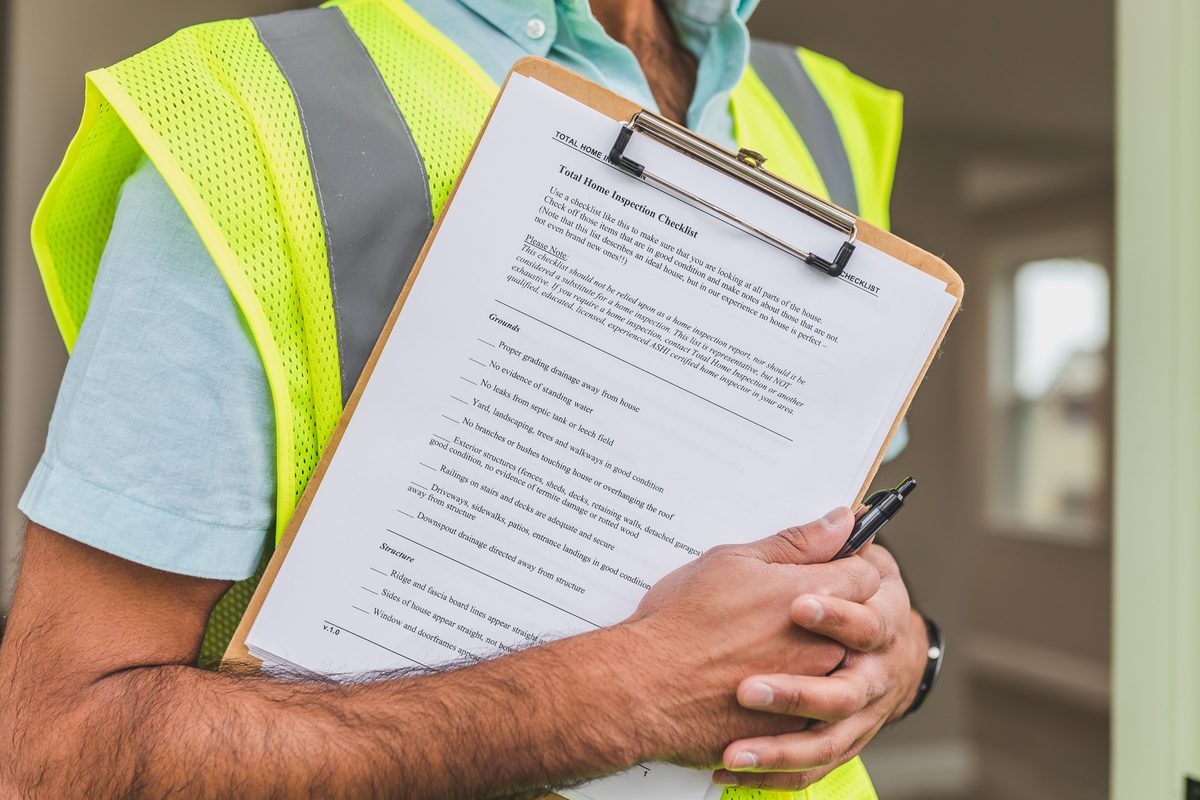
Inspectors review basic safety and maintenance items from the RRIO Checklist, and only items on the checklist are inspected. Items marked with an asterisk must be repaired to pass; the rest are advisory.
The checklist is organized into numbered sections. In summary:
SDCI names these as common failures: missing or non-working smoke and carbon monoxide alarms, a missing discharge line on the hot water tank, missing handrails on stairs, missing or inadequate guardrails on decks 30 inches or more above grade, exposed wiring, and a front door without an observation port or window. Smoke alarms, carbon monoxide alarms, handrails and deadbolts must meet current code regardless of when the building was built.
The advisory items matter too. If a tenant later complains about an advisory item, the Housing and Building Maintenance Code can still require the repair. A regular walk-through helps, and our inspection and maintenance work covers exactly these items.
A qualified private inspector is registered with the City, has completed RRIO training and holds an accepted certification.
SDCI accepts these certifications: AACE Property Maintenance and Housing Inspector, ICC Property Maintenance and Housing Inspector, ICC Residential Building (Code) Inspector, or a Washington State home inspector certification under RCW 18.280. Inspectors must use the RRIO Inspection Results Inspector Checklist and submit results through the Seattle Services Portal. Once the property passes, the private inspector submits the results and issues the Certificate of Compliance.
You must register once a tenant occupies a unit and complete a required inspection by the due date on your Notice of Inspection. Missing either brings a $52.50 late fee, and the City may issue a Notice of Violation with penalties of $150 per day for the first ten days and $500 per day after that.
Before any inspection, give every tenant written notice at least 48 hours ahead, regardless of which units are selected. SDCI provides a template that also covers the tenant’s right to request repairs. Tenants cannot unreasonably deny access. If you need more time to finish repairs, contact the RRIO program before the due date, because SDCI can extend the date while you are working toward repairs, but a missed date with no contact can lead to enforcement. Unresolved violations are referred to the City Attorney.
Registration also affects evictions. The City lists failure to register as a defense a tenant can raise, so keep your registration current before you serve a notice. Our Seattle landlord-tenant law guide covers how that fits with just cause, and our year-end checklist puts the renewal on your calendar.
As of January 2026, it is $126 per property including the first unit, plus $31.50 for each additional unit, valid for two years. A two-unit property pays $157.50. Fees can change, so check SDCI before paying.
Every two years. SDCI sends reminders by letter and email, and you can renew online through the Seattle Services Portal for the same fee as registration.
At least once every 5 to 10 years. SDCI chooses properties at random or because of earlier problems, and there is a 10% chance of a second selection in the following five years.
Yes. Every rental unit in the property must get written notice at least 48 hours before the inspection, regardless of which units are selected. SDCI offers a notice template.
You must repair the required items and pass a reinspection by the due date. City inspectors provide up to two free reinspections, and private inspectors set their own rates. SDCI may extend the date if you are working in good faith.
A $52.50 late fee applies to overdue registrations and inspections, and the City may issue a Notice of Violation with penalties of $150 per day for ten days and then $500 per day under SMC 22.214.086.
Own a rental in Seattle?
Keeping up with state and Seattle rules is a lot for an owner to track alone. Pacific Crest Real Estate manages more than 4,200 homes and works with these deadlines every day.
Talk to our team about managing your property
Sources